
2026 Snellius Medal Awarded to Prof. Dr. Pieternel Levelt and TROPOMI Team
On March 13, 2026, Prof. Dr. Pieternel Levelt was awarded the prestigious Snellius Medal, a rare distinction granted only once per decade, in recognition of her groundbreaking contributions to atmospheric satellite observations. The award honors her leadership in the development of OMI and TROPOMI, instruments that have become essential for monitoring ozone, nitrogen oxides, aerosols, and methane to inform global climate and air quality policy.
The jury, chaired by Prof. Stan Bentvelsen, explicitly extended this recognition to the entire TROPOMI team, citing the collective excellence of researchers and engineers from KNMI, TNO, SRON, and Airbus Netherlands. This honor celebrates the team’s ability to advance fundamental imaging spectrometry and bridge the gap between complex optical engineering and high-impact societal solutions.
TROPOMI Celebrates 7-Years in Space
As of October 13, 2024 TROPOMI celebrated 7 years in space, thus exceeding its expected years of life! TROPOMI is functioning beyond expectations and with that it can provide us with high-quality data for another 10 years. In this news item, four important achievements of the satellite instrument are highlighted.
Successful Collaboration between Satellite Instruments TROPOMI and EarthCARE
New research shows that measurements from the TROPOMI instrument and the EarthCARE satellite's lidar closely match over both land and sea. This marks the first successful joint use of these two KNMI-managed satellite instruments to map particulate matter layer heights worldwide. While TROPOMI provides daily global coverage, EarthCARE delivers detailed vertical profiles directly along its flight path.
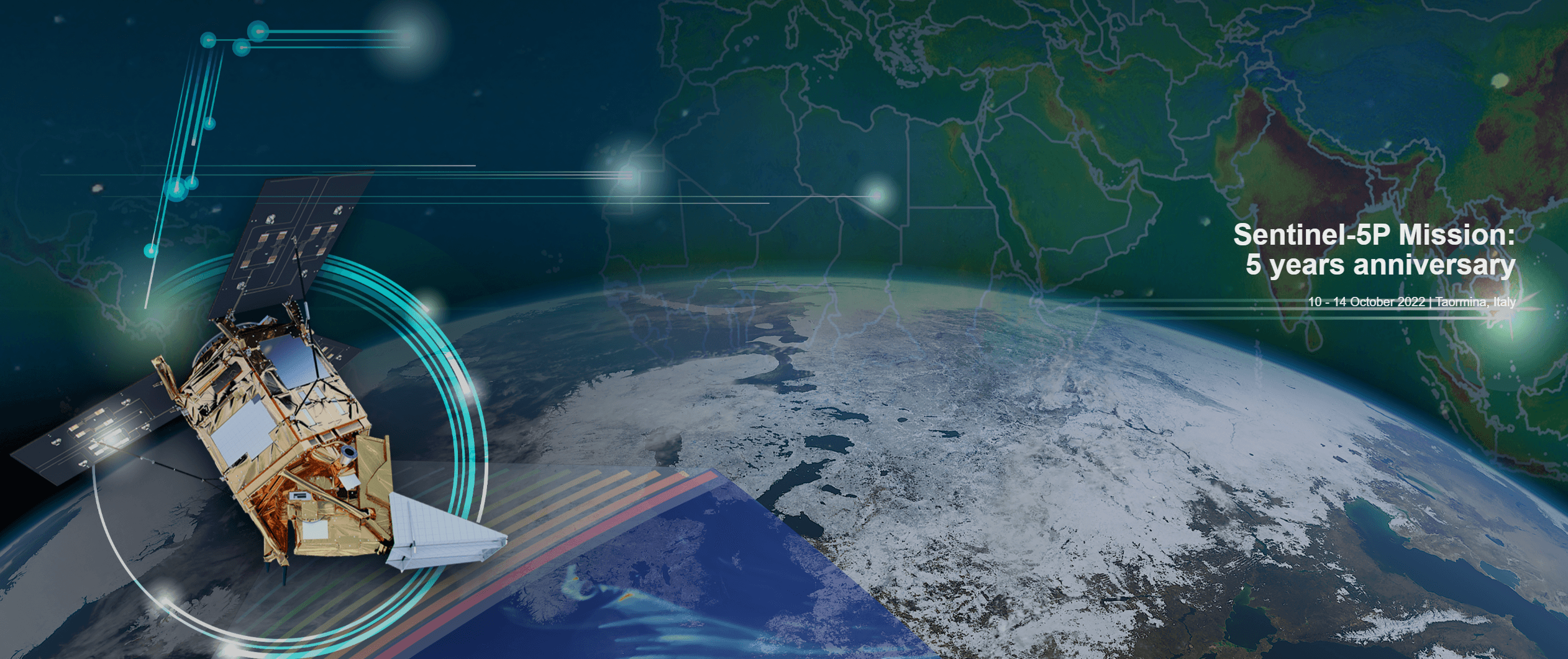
Image: © ESA / ESA
TROPOMI 5-Year Anniversary
To celebrate the 5-year anniversary of the successful launch of TROPOMI on 13 October 2017, a celebratory meeting was held in Taormina, Italy from 10-14 October 2022 to highlight the mission heritage and achievements. It was an excellent occasion to bring teams together from all stages of mission planning, instrument construction, testing, calibration, flight operations to algorithm development, deployment and validation.
You can revisit this meeting and view all the presentations via the S5P 5-years meeting website hosted by ESA.
TROPOMI Sees the Sources of Methane
Methane (CH4) is a potent greenhouse gas that plays an important role in climate change, and its sources can be diverse, from oil and gas extraction to landfills. With the help of TROPOMI data, several large methane leaks have been detected worldwide, which would otherwise be difficult to find. For example, methane plumes have been discovered over oil and gas fields in Russia, the United States and other parts of the world. These discoveries are crucial, as they enable countries and companies to take action to address these emissions and thus reduce the impact on the climate.
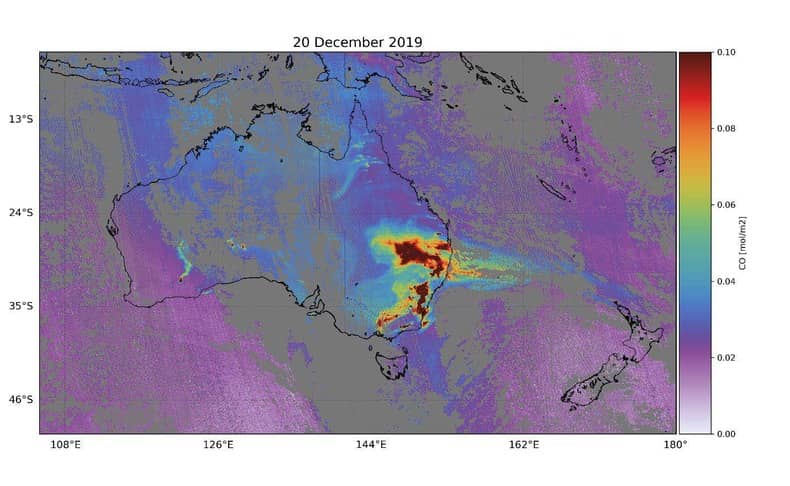
Image: © SRON
Australian Bushfires Produced Almost Twice as much CO2 as all Australians in a Year
Australia was ravaged by huge forest fires in the summer of 2019-2020, also known as the 'Black Summer'. Researchers from VU University Amsterdam, SRON Netherlands Institute for Space Research and the Royal Netherlands Meteorological Institute (KNMI) used data from TROPOMI to determine how much CO2 was released. The bushfires produced almost twice as much CO2 as the annual fossil fuel consumption across Australia.
Insights into Air Pollution during the COVID-19 Lockdowns
One of the most striking achievements of TROPOMI is its ability to provide a detailed picture of air quality. This possibility became particularly evident during the COVID-19 pandemic. When countries around the world adopted lockdown measures, traffic and industrial activity decreased dramatically, leading to major changes in air quality. Thanks to TROPOMI's high resolution, scientists were able to observe in near real-time how concentrations of pollutants, such as nitrogen dioxide (NO2), decreased.